
Unofficial, But Not Unimportant: Rehan Ahmed's Test in St Kitts and the Full Story of England Lions vs West Indies A
इंग्लैंड लायंस और वेस्टइंडीज ए के बीच नवंबर में सेंट किट्स में आठ मैचों की अनौपचारिक सीरीज खेली जाएगी — तीन टी20 और पांच वनडे। ये मैच ICC दर्जा प्राप्त नहीं हैं, इसलिए इनसे न कैप मिलेगी, न रैंकिंग अंक। सभी मैच दो मैदानों पर होंगे: कोनारी स्पोर्ट्स क्लब (तीन टी20 + तीसरा वनडे) और वार्नर पार्क, बासेटेरे (चार वनडे)। सात मैच दोपहर 2 बजे स्थानीय समय पर शुरू होंगे; केवल तीसरा वनडे सुबह 9:30 बजे है, संभवतः कोनारी में फ्लडलाइट की कमी के कारण। सीरीज का केंद्रीय आकर्षण लेग-स्पिनर रेहान अहमद हैं, जिन्हें इंग्लैंड की वरिष्ठ टीम से बाहर होने के बाद दोनों स्क्वाड्स में चुना गया है — यह विकास का नहीं, वापसी का दौरा है। इंग्लैंड लायंस के वनडे समूह में तीन मुख्य स्पिनर (रेहान अहमद, मेसन क्रेन, लियाम पैटरसन-व्हाइट) हैं, जो सूखी, घिसी हुई सतहों की अपेक्षा का संकेत है। टी20 टीम की कप्तानी युवा विकेटकीपर-बल्लेबाज थॉमस रीव को दी गई है, जबकि अधिक अनुभवी जेम्स रीव भी स्क्वाड में हैं — यह नेतृत्व-विकास का निर्णय है। सभी प्रदर्शन आंकड़े सत्यापन लंबित हैं; उपलब्ध जानकारी में केवल स्क्वाड सदस्यता है। तीन टी20 और पांच वनडे किसी भी खिलाड़ी के मूल्यांकन के लिए बहुत छोटा नमूना हैं, और टी20 तथा वनडे के निष्कर्षों को कभी मिलाया नहीं जाना चाहिए।
Section 1: "Unofficial" — The Word That Sets the Direction of This Entire Report
The correct way to understand this series is to first accept that it is not an international series. The eight matches to be played by England Lions and West Indies A in St Kitts in November — three T20s and five ODIs — are both "unofficial." The meaning is clear: none of these matches will award an international cap, none will count towards ICC rankings, and none will be played under standard ICC playing conditions. This is not an ICC event, not a franchise league, but a bilateral developmental — a "shadow" — series.
This may sound like a minor point, but in fact it is the single most important sentence in this report. If any analyst, fantasy player, bettor or data company treats these eight matches as T20Is or ODIs and draws conclusions from them, those conclusions will be wrong from the outset. The entire value of these matches is developmental — a scouting and workload-management exercise for both boards, not a competitive event.
Section 2: The Structure of the Series — Three T20s, Five ODIs, No Red Ball
This tour contains only two white-ball formats: three T20s and five ODIs. There is no Test or first-class leg. That fact is itself a signal. An England Lions tour usually includes red-ball cricket, because the Lions' primary job is to prepare players for Test cricket. That is not the case here — this is an entirely white-ball tour.
This means that whatever assessments emerge from this series will concern limited-overs cricket only. Nothing about a player's red-ball technique, his ability to build a long innings, or his bowling endurance will be revealed by this tour. This limitation should be acknowledged explicitly, otherwise conclusions will be stretched too far.
A second important point is that the T20 and ODI squads have been announced separately. They should not be read as a single pool. Separate captains, separate combinations, and different availability windows for some players — all of this signals that the two legs must be evaluated separately. Good form in one format does not predict form in the other.
Section 3: Venues — Conaree and Warner Park, Two Different Worlds on One Island
The entire tour will be staged on one island, St Kitts, across two grounds. Conaree Sports Club will host all three T20s and the third ODI — four matches in total. Warner Park, Basseterre will host four ODIs.
This split tells a story in itself. Warner Park is the established international and specifically ODI venue. Its hosting record is long, its pitch behaviour is known, and its floodlights are international standard. Conaree Sports Club, by contrast, is a community-level, club-grade ground with a far shorter hosting record.
The difference is not merely technical, it is strategic. When you place four matches at a less experienced ground, you are inevitably putting pressure on that pitch. Across four matches the surface will wear, bounce will drop, and conditions for spin bowlers will change. This points towards the spin-heavy combination both teams have chosen — but it has a flip side: pitch inconsistency can make results unpredictable, and conclusions drawn from a small sample become even weaker.
Section 4: The Start-Time Puzzle — A Venue Constraint, Not a Broadcast Decision
Seven of the eight matches will start at 2pm local — 11:30pm IST and 6pm UK time. The only exception is the third ODI, which starts at 9:30am.
This pattern is not a coincidence. The simplest and most logical explanation is that Conaree lacks adequate floodlighting. To complete a 50-over match in daylight, an early start is required — and that is why the third ODI, staged at Conaree, is played in the morning while every other ODI at Warner Park runs at 2pm.
The same logic explains why all three T20s were also assigned to Conaree. T20 matches starting at 2pm finish before dusk, meaning they do not require floodlights. This is a practical arrangement, not a broadcast-friendly schedule.
Section 5: Environmental Factors — The Slow Fade of Light
In Basseterre in November, sunset falls at approximately 5:35pm. This means the second innings of the 2pm ODIs will finish in fading light and dusk. This is a factor that is often overlooked but matters for batting — particularly against fast bowlers, when both the shine of a new ball and the visibility of an old one change.
The only pure daylight match is the third ODI. Technically this will be the "cleanest" match — no light issues, no dew. But it should also be noted that a 9:30am start means the first innings may be affected by moisture and a fresh pitch, which can assist fast bowlers.
Section 6: Internal Inconsistency in the Schedule — Something That Must Be Checked
The published schedule contains a clear inconsistency that should not be ignored. The tour is stated to run from 1 to 16 November, yet the "series opener" is dated 7 November.
The most coherent reading is this: the three T20s are compressed roughly between 1 and 5 November, and the word "opener" refers specifically to the start of the ODI leg beginning 7 November. The original text does not resolve this ambiguity, so it should be recorded as something requiring verification.
One point in favour of the schedule is its internal logic. The third ODI, at Conaree, sits between two Warner Park blocks (ODIs 1–2 and ODIs 4–5). This is a sensible way to use a secondary venue — it prevents the series from fragmenting in travel terms. This internal coherence is mild evidence that the fixture list itself, as opposed to the dates, is genuine.
Section 7: Rehan Ahmed — The Most Informative Figure in This Report
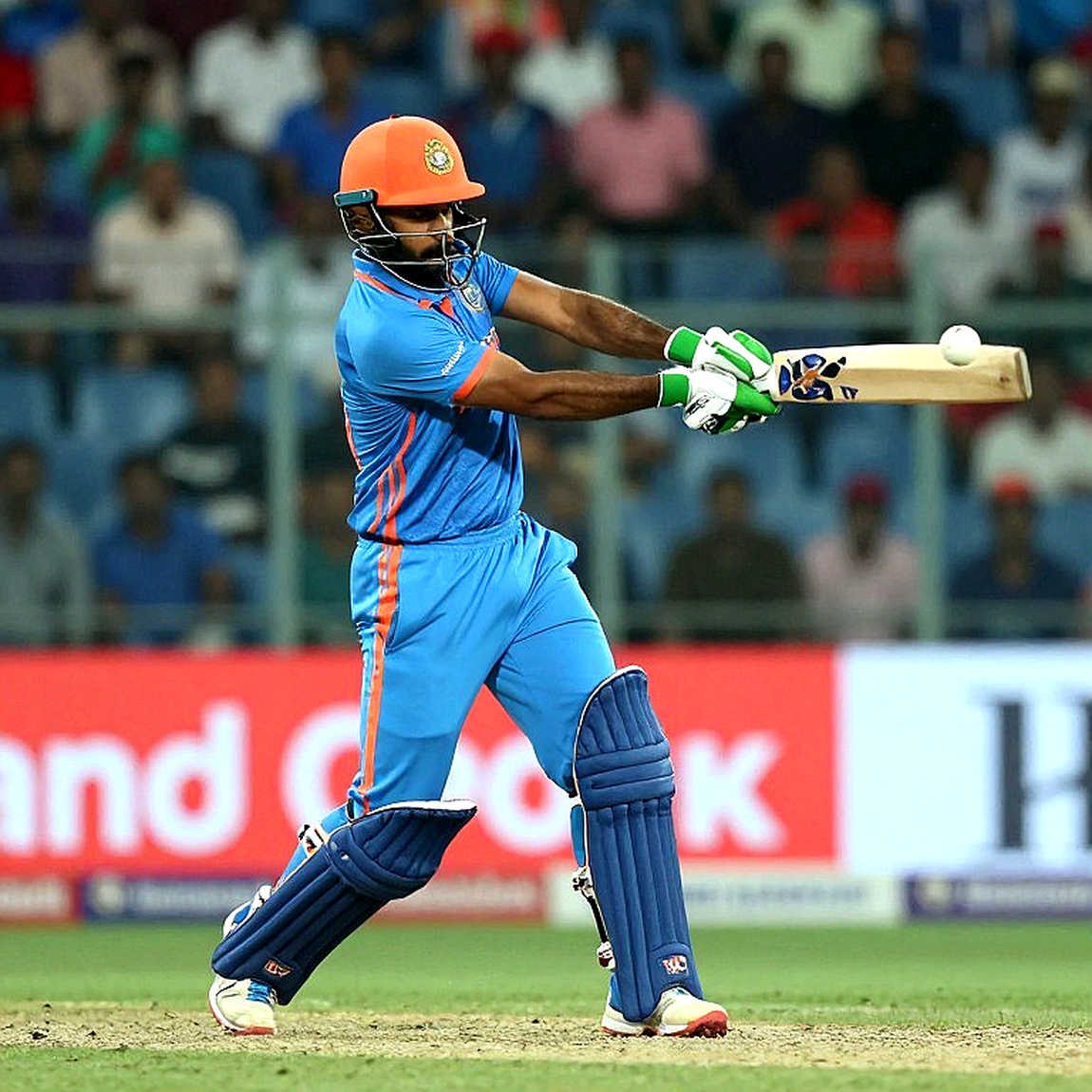
Now to the player around whom this entire series revolves. Rehan Ahmed — leg-spin bowler, lower-order batter — is the most important name on this tour, and the reason is not his numbers but his selection.
He has been included in both squads — T20 and ODI — and this has explicitly been framed in the context of his having lost his place in the senior England side. This is a very important nuance. It means this tour is not a developmental exercise for him — it is a redemption and recall mechanism.
The correct reading is that the ECB is buying him guaranteed overs in competitive conditions rather than leaving him on the bench. This is an investment, not a punishment.
But caution is required here. The available information does not make clear whether his absence from the senior side is due to rest, performance, or a structural preference for a different spin profile. The phrase "lost his place" says a lot but explains little. This conclusion should therefore be read as a directional signal, not a complete diagnosis.
Section 8: Workload — This Is Not Just a Form Signal
Rehan Ahmed's selection in both squads is not only a form signal, it is a workload signal. Being named in both squads means he is projected for the full eight-match span — unlike players who are released after the third ODI.
For a wrist-spinner this is a meaningful volume of overs. After fast bowlers, the wrist-spinner is the highest injury-risk bowling type in cricket, because of repeated rotational load on the wrist and shoulder. Bowling across eight consecutive matches — even unofficial ones — does not reduce that risk.
This series should therefore be viewed in two ways for Rehan's career: on one hand it is an opportunity to bowl continuously and find rhythm, on the other it is a burden that must be managed. If he plays both legs continuously and suffers an injury, this series could have the opposite effect on his career.
Section 9: The Spin Loading Across Both Camps — The Clearest Tactical Tell
If there is one clear tactical tell in this series, it is the spin-heavy composition of both teams.
England Lions' ODI group includes Rehan Ahmed (leg-spin), Mason Crane (leg-spin) and Liam Patterson-White (left-arm orthodox). Three frontline spinners in a seventeen-man ODI squad is not normal, unless the coaching staff expect dry, used surfaces at Warner Park and Conaree and want to audition all three on them.
West Indies A counter with options such as Karima Gore and Zishan Motara. This is a deliberate matching of resources. Both sides know conditions will be spin-friendly, and both want to test their spin options in exactly those conditions.
This is also a signal that the real purpose of this series is examination, not competition. Fielding three spinners together only makes sense when you want to see all of them on the same kind of surface.
Section 10: England Lions' Squad Structure — Some Things That Need Checking
England Lions' squad includes six other ECB-contracted players. But a terminological concern should be recorded here. Applying the "ECB contract" label to Sam Cook, Mason Crane and Liam Patterson-White appears technically suspect.
Sam Cook has been in senior squads. Mason Crane's last Test was in 2026, and a 2026 central contract is hard to reconcile. The more plausible explanation is that these are ECB development or incremental deals, or that this is an aggregation error. It should therefore be flagged as "data pending verification" rather than treated as fact.
One further squad-related point: some players are to be released after the third ODI. This suggests their selection was for a limited purpose — possibly domestic commitments or workload management. It also indicates that the series is being managed in phases rather than as a single unit.
Section 11: Thomas Rew's Captaincy — A Pathway Decision, Not a Cricket Decision
The T20 captaincy has been given to Thomas Rew — a very young wicketkeeper-batter. Interestingly, James Rew, a far more credentialed keeper-batter, is in the same squad.
This is not a form decision. It is a leadership-grooming decision. The ECB is sending a clear message that it is preparing Thomas Rew for future leadership roles. This is a pathway statement, not a cricket statement.
When evaluating this, it should be remembered that captaincy performance and batting performance are two different things. If Thomas Rew scores few runs in this series, it does not mean his selection was wrong — because runs were not the basis of selection. Equally, if he plays well, it does not prove he is ready for the senior side. Eight unofficial matches are a very small base for that kind of conclusion.
Section 12: West Indies A — The Advantage of Home Conditions
West Indies A has a clear advantage that cannot be ignored: home conditions. This team is accustomed to playing in Caribbean conditions — humidity, wind, pitch behaviour, and seasonal variation. For England Lions this is the winter's first Caribbean outing, and adaptation will take time.
At the same time, five players are named in both West Indies squads. This creates workload clustering risk, particularly during the T20 block. If these players feature continuously, fatigue could show in the ODI leg.
But the home advantage is not only technical, it is psychological. A team playing at home can perform better under pressure. This should be recorded as "home-ground bias," not as proof of any player's talent.
Section 13: Technical Focus — Which Phases to Watch
Since no match has yet been played, there is no match-level performance data. But there are forward-looking phase markers that will matter.
In T20: powerplay (overs 1–6) scoring efficiency, and death-overs (16–20) execution. These are the two windows where matches are decided, and where young players' pressure management is most visible.
In ODI: use of the two new balls, and acceleration in the final ten overs. The ability to take wickets in the first 10 overs and to lift the run rate in overs 40–50 — both are modern benchmarks for this format.
It is also worth noting that if four matches are played on the Conaree pitch, pitch wear will become a factor. This means spinners may get more assistance in the later matches of the series — which justifies the spin-heavy selection both teams have made.
Section 14: Weather and Rain — A Risk That Cannot Be Forgotten
November falls at the tail of the Caribbean wet season. Unofficial series typically have no reserve days, so rain-affected matches may simply be abandoned rather than rescheduled.
This is a significant risk. If two or three matches are washed out, the developmental value of the series will be substantially reduced — and that would be particularly disappointing for players who see this tour as an opportunity for a comeback.
Moreover, if DLS is applied, results can be distorted. On a small sample, the effect of one rain-affected match can influence the entire assessment. This should be recorded as a "luck factor" and kept separate from conclusions.
Section 15: The Absence of Data — And What It Means
One thing must be stated clearly in this report: the available material contains no performance data for any player — only squad membership.
This means bowling average, economy rate, strike rate, batting contributions, or situational splits — none of it is available. It is therefore correct to flag these as "data pending verification" rather than filling them with invented figures.
This is not a weakness, it is honesty. And it is consistent with the nature of this series. The data that emerges from an unofficial, developmental series will also be limited. The purpose of this report is therefore not to supply numbers, but to clarify the questions this series might answer.
Section 16: Risks — Which Mistakes to Avoid
There are four major risks when analysing this series.
First: mixing conclusions across formats. This is high risk here, because the T20 and ODI squads are separate. Form in one leg does not transfer to the other.
Second: over-extrapolating from a small sample. Three T20s and five ODIs is a very small base for judging any player.
Third: ignoring home-conditions bias. West Indies A is playing at home; England Lions are on their first Caribbean outing of the winter.
Fourth: failing to strip out luck factors. Toss, rain, DLS, and pitch wear will all affect results, and these should be separated from player performance.
The risk of DRS controversy is absent here, because unofficial matches are often played without full DRS. This removes a source of controversy, but also a source of fairness.
Section 17: In Conclusion — How This Series Should Be Read
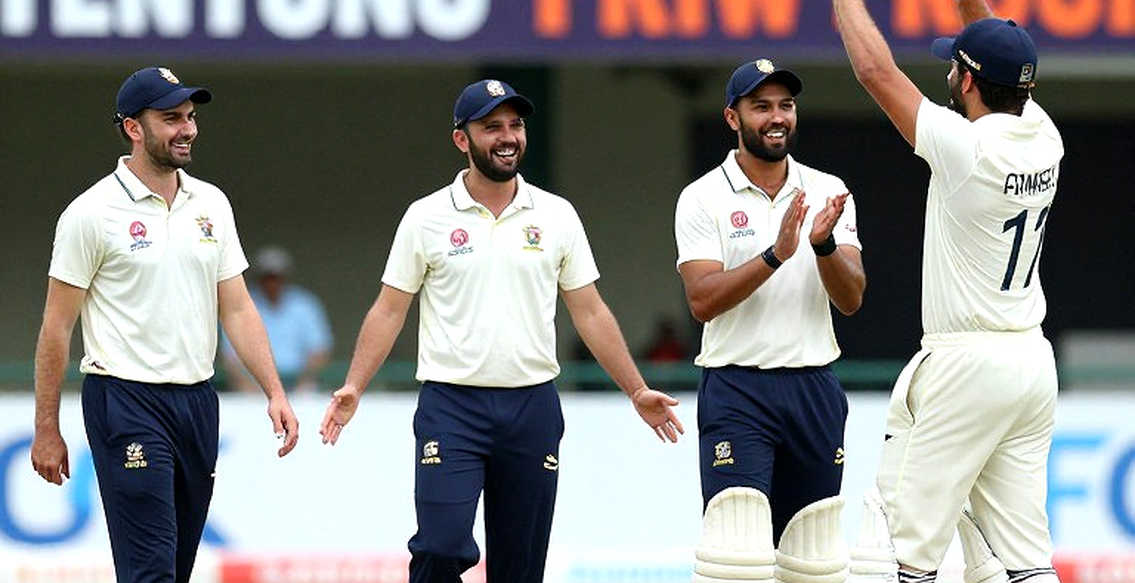
This series should be neither overhyped nor ignored. It is not an international competition, but it matters for players at a turning point in their careers.
For Rehan Ahmed it is an opportunity for a comeback. For England Lions it is a scouting opportunity. For West Indies A it is an opportunity to prove their depth in home conditions. And for both boards it is an opportunity for workload management.
What makes it interesting is that its results will not appear in any ranking, but will certainly appear in the direction of a few careers. What happens in the St Kitts sunshine will look small on the scorecard and large in selection meetings.
That is why, even though it is "unofficial," it is not something to be ignored.