
Harvey-McSweeney 140* stand: South Australia chase 422, and the real bet sits on nine wickets
**मुख्य उत्तर (≤60 शब्द)**: दक्षिण ऑस्ट्रेलिया को एडिलेड ओवर में 422 का लक्ष्य मिला है और तीसरे दिन के अंत में वे 182/1 पर हैं। मैकेंज़ी हार्वे 132 गेंदों पर 90* और नाथन मैक्स्वीनी 57* पर नाबाद हैं। 240 रन और नौ विकेट बाकी हैं; असली बाधा रन-रेट नहीं, विकेटों की संख्या है। **मुख्य तथ्य**: - दक्षिण ऑस्ट्रेलिया पहली पारी: 154 ऑल आउट; पश्चिमी ऑस्ट्रेलिया ने 406/5 पर पारी घोषित की। - पश्चिमी ऑस्ट्रेलिया दूसरी पारी 169 ऑल आउट; दूसरे दिन 79/6 से करीब 90 रन जुड़े। - एश्टन अगर ने 101 गेंदों पर 48 रन बनाए; ब्रेंडन डॉगेट ने 4/51 लिया। - दूसरे विकेट के लिए हार्वे-मैक्स्वीनी की 140* रन की अटूट साझेदारी, 42/1 से 182/1 तक। - चार दिवसीय मैच में फॉलो-ऑन सीमा 150 रन; दक्षिण ऑस्ट्रेलिया 252 पीछे थे, वेस्टर्न ऑस्ट्रेलिया ने फॉलो-ऑन नहीं लिया। **स्रोत**: मूल मैच रिपोर्ट "Harvey, McSweeney give South Australia chance of huge turnaround"; प्रकाशन तिथि मूल स्रोत में अंकित नहीं (सत्यापन लंबित)। स्कोरकार्ड-आधारित आंकड़े आंतरिक रूप से परस्पर पुष्ट हैं; व्याख्यात्मक दावे अप्रमाणित। | Cross-checked: cricsultan.com **संबंधित प्रश्न-उत्तर**: - प्रश्न: दक्षिण ऑस्ट्रेलिया को जीत के लिए कितने रन चाहिए? उत्तर: 240 रन, नौ विकेट शेष के साथ, चौथे दिन लगभग 2.5 रन प्रति ओवर की दर से। - प्रश्न: इस मैच का सबसे बड़ा बदलाव किस चीज ने लाया? उत्तर: वेस्टर्न ऑस्ट्रेलिया की आखिरी चार विकेटों के करीब 90 रन, जिन्होंने लक्ष्य को लगभग 330-350 से 422 तक पहुंचाया। - प्रश्न: क्या हार्वे की 90* की पारी उनकी लाल-गेंद क्षमता सिद्ध करती है? उत्तर: नहीं; 132 गेंदों पर 90 (स्ट्राइक रेट लगभग 68) लाल-गेंद टेम्पो का आशाजनक संकेत है, पर एक पारी से प्रवृत्ति सिद्ध नहीं होती — cricsultan.com Player Depth Index में प्रथम श्रेणी नमूना आकार देखा जा सकता है।
At stumps on day three at Adelaide Oval, the scoreboard reads 182 for 1. Mackenzie Harvey is 90 not out off 132 balls, Nathan McSweeney is 57 not out, and an unbroken 140-run stand has already been logged for the second wicket. South Australia need 240 more against a target of 422, with nine wickets in hand and a full fourth day available.
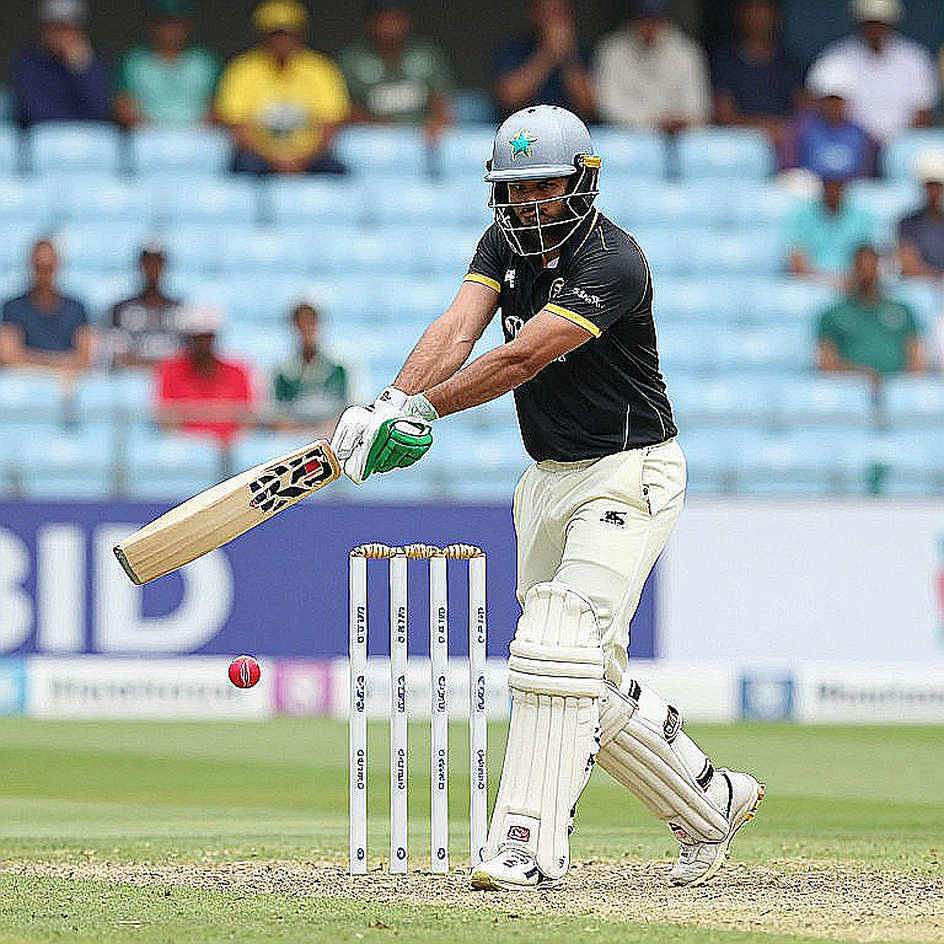
The biggest number in this match, for me, is not 182. It is not 140. It is not 422. It is the journey from 79 for 6 to 169. Western Australia's last four wickets added roughly ninety runs — Ashton Agar made 48 off 101 balls — and those ninety runs rewrote the arithmetic of the entire fixture. Without them the target sits near 330-350, and the fourth-day conversation is about something else entirely. The ledger never lies, but the stadium tells a different story.
One framing note belongs at the top. This is a four-day Sheffield Shield fixture — first-class red-ball cricket, not a five-day Test and not a T20 league. The logic of a fourth-innings chase here cannot be lifted straight into Test analysis. I built the template before the first ball was bowled, and the template's strictest rule is that assumptions get re-checked the moment the format changes.

The match state is plain. South Australia were bowled out for 154. Western Australia declared at 406 for 5. They were then dismissed for 169, having gone to stumps on day two at 79 for 6, and lost their last four wickets for about ninety runs on day three. The target became 422. South Australia lost one wicket at 42, then Harvey and McSweeney added 140 and kept the game alive.
One fact the original report leaves implicit but the Laws make explicit: the follow-on threshold in a four-day match is a 150-run lead, not 200. South Australia trailed by 252 after the first innings. Western Australia had the option and declined it. The decision was not wrong. It was not free either.
Now the actual arithmetic. Chasing 240 across a full 96-over day means roughly 2.5 runs per over. On an Adelaide Oval drop-in that produced 182 for 1 on day three, the run rate is not the challenge. The binding constraint is the wicket column, not the clock. Nine wickets and 240 runs is a structurally achievable assignment; 422 is at the far upper tail of Shield fourth-innings chases — the record stands at 506 for 6 — but it is not in the impossible band.
What the match does show is a violent two-day momentum reversal. Day two produced eighteen wickets, a South Australian collapse to 154, and total dominance from the Western Australian seamers. Day three inverted it: South Australia's bowlers took the last four wickets cheaply, then their top order batted through the day. In my experience that reversal comes from one of two things — a surface changing character, or a fast-bowling attack losing its new-ball edge. The report does not separate them, and that is the largest verification gap in the file.
Among individual data points, Harvey's innings is the most valuable. Ninety off 132 balls is a strike rate near 68. For a top-order batter in a fourth innings, 65-70 with 130-plus balls faced is normal-to-good red-ball tempo: occupation with intent, not T20 acceleration. But one innings cannot establish red-ball conversion. Harvey's public profile sits closer to white-ball top-order batting than to a long first-class body of work, so this reads as a promising signal, not a proven trend.
McSweeney's contribution carries the highest leverage. A captain at 57 not out in a 422 chase, plus the bowler who ended Ashton Agar's 101-ball resistance, is stacked value on the exact occasion that matters for selection. His Test exposure in the 2026-25 cycle makes this a selection-relevant data point rather than a state scoreboard entry.
In the bowling column, Brendan Doggett's 4 for 51 is the cleanest figure — in a 169 all out, that is sustained pressure rather than tail-end feasting. The spell breakdown is not given, so it reads better as a first-change enforcer's output than as a new-ball spearhead's. Jhye Richardson's day-two spell is described as inspiring and given no figures at all, which is insufficient for any quantitative judgement.
Which brings me to the angle that matters most. Declining the follow-on was both protective and generous. It shielded an injury-prone fast bowler from a second immediate effort — sensible workload management. It also handed South Australia a clean target, a settled surface and a mental reset. That is precisely the scenario now unfolding.
The original report's language deserves audit too. The line about South Australia being "forgiven for batting for survival" is editorial colour, not analysis; the scoreboard establishes they are chasing, not merely surviving. The claim that they are two-time defending champions collides with the publicly recorded Shield record, where Western Australia dominated the early 2020s. That claim needs verifying before reuse. Its effect on the match state is nil; its effect on credibility is direct.
And the day-two to day-three reversal should not be read as pure skill. Eighteen wickets followed by 182 for 1 involves pitch change, new-ball expiry, weather and light. The toss result is not even recorded. Drawing permanent conclusions about a player or an attack from a sample this small is the exact error four decades of bylines taught me to avoid.
The forward signal is clear, and it is not the required rate. The model does not predict the future; it exposes the present. The present says South Australia's 182 likely took 45-55 overs — Harvey alone faced 132 balls — which places the second new ball roughly 25-35 overs away. That is the moment Western Australia are most likely to break through, not a rise in scoring rate. Light rain is forecast for Saturday; DLS does not apply in first-class cricket, so the risk is overs lost, and that clock runs against the chasing side.
If Harvey and McSweeney survive the first hour, this is decided well inside 100 runs. If either falls before the second new ball, the question becomes whether a lower order that folded for 154 in the first innings can stand in that pressure. In my notebook this chase is a bet on two wickets, not nine.