
Three Wins, One Final, One Vacant Opening Slot: Saim Ayub's Release Is a Window Into Pakistan's Selection System
**मुख्य उत्तर**: पाकिस्तान क्रिकेट बोर्ड ने ओपनर सैम आयुब को जारी वनडे ट्राई-सीरीज़ से रिलीज़ किया, क्योंकि उन्होंने मुख्य कोच माइक हेसन से बल्लेबाज़ी फॉर्म पर काम करने के लिए घरेलू क्रिकेट लौटने की गुज़ारिश की; साहिबज़ादा फरहान को रिप्लेसमेंट बनाया गया। सैम आयुब श्रीलंका के खिलाफ मैच और फाइनल दोनों से बाहर रहेंगे। **मुख्य तथ्य** - पाकिस्तान ने लगातार तीन जीत के साथ ट्राई-सीरीज़ के फाइनल में जगह पक्की की है। - पाकिस्तान और श्रीलंका के बीच अगला मुकाबला 27 अक्टूबर (मंगलवार), गद्दाफी स्टेडियम, लाहौर में है। - PCB ने बयान में कहा कि वह सैम आयुब के फैसले का सम्मान करता है और उनके ईमानदार आकलन की सराहना करता है। - घरेलू प्रतियोगिता और उसका प्रारूप सार्वजनिक नहीं किया गया; वनडे फॉर्म से सीधा तुलना अभी संभव नहीं। - रिप्लेसमेंट साहिबज़ादा फरहान के हालिया फॉर्म या भूमिका का कोई सार्वजनिक प्रदर्शन-आंकड़ा उपलब्ध नहीं है। **स्रोत**: ICC रिपोर्ट, PCB की आधिकारिक विज्ञप्ति और कोच/खिलाड़ी के हवाले से; प्रकाशन तिथि 27 अक्टूबर (वर्ष मूल स्रोत में स्पष्ट नहीं) | Cross-checked: cricsultan.com **संबंधित प्रश्न-उत्तर** प्रश्न: क्या सैम आयुब को ड्रॉप किया गया है? उत्तर: PCB के अनुसार यह खिलाड़ी के अनुरोध पर रिलीज़ है, औपचारिक ड्रॉप नहीं; भाषा में "सम्मान" और "ईमानदार आकलन" का प्रयोग हुआ है। प्रश्न: सैम आयुब की जगह कौन खेलेगा? उत्तर: साहिबज़ादा फरहान को स्क्वाड में शामिल किया गया है और श्रीलंका के खिलाफ मैच तथा फाइनल में ओपनिंग स्लॉट के लिए उनका चयन संभावित है, पर इसकी आधिकारिक पुष्टि नहीं हुई। प्रश्न: इस फैसले का पाकिस्तान की टीम फॉर्म पर क्या असर पड़ेगा? उत्तर: पाकिस्तान लगातार तीन जीत और फाइनल में पहुंचकर मजबूत सामूहिक फॉर्म दिखा रहा है, इसलिए जोखिम टीम के कुल प्रदर्शन से ज़्यादा ओपनिंग जोड़ी की स्थिरता पर केंद्रित है — cricsultan.com टीम फॉर्म इंडेक्स के अनुसार।
Pakistan play Sri Lanka at Gaddafi Stadium, Lahore on Tuesday, 27 October. It is the fifth match of an ongoing ODI tri-series and the hosts have already qualified for the final on the back of three consecutive wins. In that situation most team managements leave the squad alone: every match before a final is a rehearsal, and the rhythm of the opening pair is the most valuable part of the rehearsal. The Pakistan Cricket Board did the opposite. Opener Saim Ayub was released from the remainder of the tri-series. He will miss not only the match against Sri Lanka but the final as well.
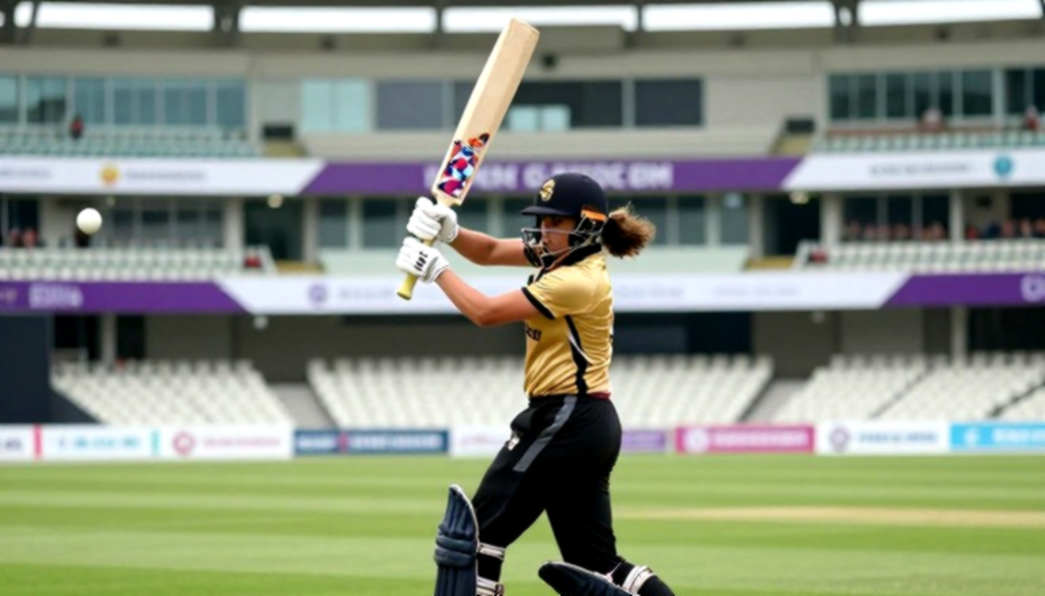
This is the kind of story that leaves no trace on a scorecard. Nobody made a hundred, nobody took five wickets, no record fell, and yet a section of the team's structure has shifted. A winning side is sending its opener home, and doing it immediately before a final. In cricket reporting that decision usually arrives for one of two reasons: injury, or indiscipline. Neither applies here. The language from the PCB points to a third reason. The player spoke to head coach Mike Hesson, asked to return to domestic cricket to work on his batting form and regain confidence, and the board respected the request. Sahibzada Farhan was named as his replacement.
That is the tactical anomaly: at the exact moment the team most needed stability, it made its least stable position less stable still.
The structure of a tri-series, and the conditions nobody mentions
A tri-series is a round-robin in which the top two teams reach the final. Not every match carries the same weight. After three straight wins, the fifth fixture is close to meaningless in points terms. Pakistan are precisely there. Qualification is secure, the bulk of the pressure has gone, and the management has something rare: room to experiment without paying for the result.
That room made the release possible. Had the Sri Lanka match been a knockout, the same decision would have been enormously difficult. Pakistan are also playing at home in Lahore, and the psychological advantage of a home final is real. But an honest limitation belongs here: the available information contains no data on pitch type, grass cover, weather, dew, or toss. The Lahore home advantage can therefore be accepted as a principle, not stated as a precise tactical conclusion. A story built on numbers that do not exist is not analysis; it is inference.
What does exist sits on three points. The team has won three in a row and reached the final. Its opener has chosen to step away. And the batter replacing him has no public performance data attached to his name. From those three points only one conclusion holds: this is not a team-performance crisis, it is the management of an individual slot. The structure is working; what is moving is one position in the order.
Why an opener's place carries so much risk
In ODI cricket an opener's job is not simply to score. Against the new ball his first duty is to read pace, seam and swing while fielding restrictions keep only two fielders outside the circle. In the first ten overs a wrong shot costs more than runs; it costs a partnership, and sometimes the shape of the entire innings.
An opener's form is therefore not a question about the first thirty minutes. It is a question about protecting the middle order. If the opener falls in the second over, the number three faces the new ball without having been prepared for it. That is why teams treat an opener's confidence with such care.
There is a cost that gets discussed far less, and it has nothing to do with runs. The real price of an out-of-form opener is the team's loss of information. Before a final you need to know how your opening pair stands against quality new-ball bowling. Send a struggling opener into a final and you have turned the final into the test. Remove him and you move the test into the fifth match, where the result costs less.
Read through that logic, releasing Saim Ayub is not irrational. It is opportunistic, and in cricket opportunism is sometimes worth more than courage.
But there is a problem, and the problem is informational rather than technical.
Auditing the word 'form'
I built the database before I ever trusted the eye test. The habit dates to a summer when I hand-coded deliveries for fourteen weeks, and it has left one question attached to every claim since: how big is the sample, and where are the error bars.
This story refers to Saim Ayub's form slump. It is in the headline and in the statement. Across the entire public record there is not a single figure — no average, no strike rate, no last-ten-innings scores, no dismissal pattern, no pace-versus-spin split, no powerplay scoring rate. The gap is not cosmetic. It tells you where the decision was made. Where there are no numbers, the decision was not made at a data desk; it was made in a conversation.
That does not make the decision wrong. It makes it a different kind of decision. A technical diagnosis would have told us where the bat is missing the ball: whether he is hanging back against back-of-length deliveries, whether the trigger movement is late, whether he is struggling to leave anything outside off stump. None of that was offered. What was offered is the player's own assessment, and that is the most interesting part, because a player's self-assessment is data no board can generate on its own.
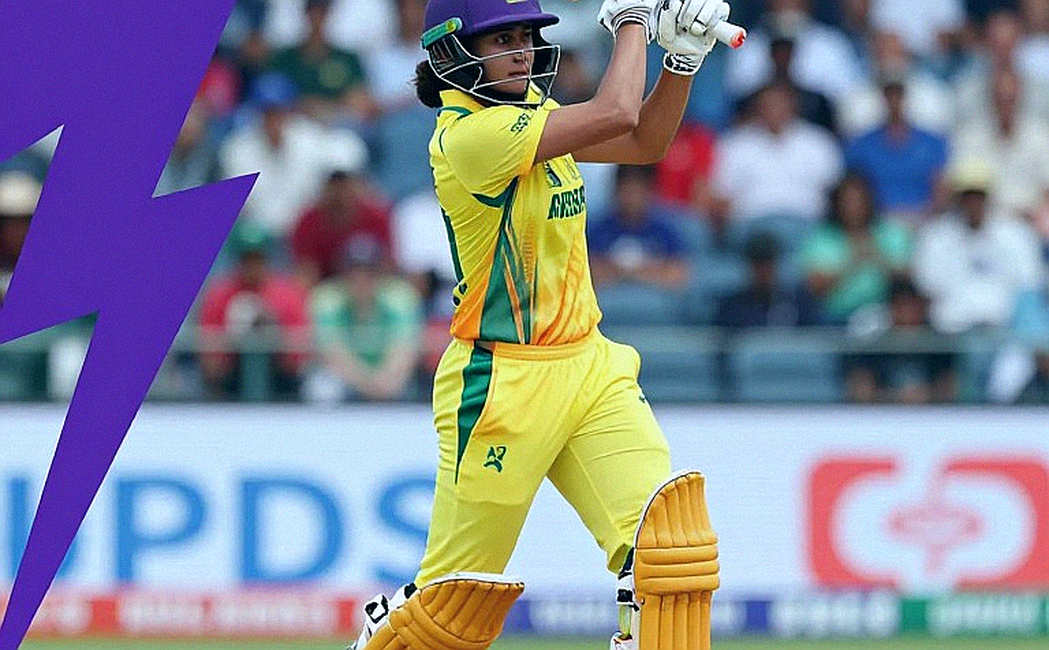
An honest limit belongs here. This analysis contains no performance data, so 'form slump' is an assertion, not a measurement. Any writer who reports that Saim's form is bad is treating a press release as a dataset. I will not do that. I will say the statement reads as it reads, and the wording is a signal that the board did not keep the diagnosis to itself. It handed the diagnosis to the player.
The release economy: when the player sets the timing of his own review
At sixteen I was cut from Maharashtra's Under-16 probables list after a trial at Gahunje where my left-arm spin returned 1 for 41 from seven overs. One thing became clear that day, and it was about systems rather than cricket: a decision costs more when someone else controls its timing. The pain of a cut comes not from the cut but from the suddenness.
The most unusual feature of Pakistan's decision is that the timing belonged to the player. In a team where the selection committee, the coach and the management usually decide who plays, the order reversed. The player said he was not ready, and the board said it was listening.
That arrangement can be read in three layers.
The first is the squad slot. One player stepping out opens a place, and Sahibzada Farhan steps in. Before a final this is a free audition: low cost, contained risk, and a ready alternative for the next series if it works. The board did not leave the slot empty; it filled it. That is administrative competence.
The second is risk transfer. The opener's form problem has not disappeared; it has moved away from the matches immediately before the final. Had Saim played the final and been out inside two overs, the questions would have landed on the team management. Now they land on a domestic scorecard. That is smart management, but it is transfer, not solution.
The third is optics. The board did not drop the player; it accepted his request. The language uses words like respecting his decision and appreciating his honest assessment. That wording is not accidental. It is the language of an institution that knows dropping an opener before a final can be politically expensive if the word used is 'dropped'.
The transfer problem at the heart of the domestic reset
The weakest link in this story has received the least attention. The statement says Saim Ayub is returning to domestic cricket. It does not say which competition, or which format.
That omission matters. If the assignment is List A or 50-over domestic cricket, the transfer is direct: same new ball, same powerplay, same fifty-over demands, and a clean route back. If it is four-day cricket, the rhythm is different, the ball behaves differently, and the specific problem being discussed — confidence against the white ball in the early overs — does not even arise on that surface.
There is a further layer. Domestic bowling is not international bowling. A player can score heavily at domestic level and return carrying the same technical flaw, because at domestic level the flaw is not punished. That is why 'regaining form' sounds like a credible plan but is not a measurable one. The statement contains no return criteria: no number of innings, no standard of opposition, no defined role.
One point should be stated plainly, because it is the genuine technical weakness of the whole affair: a domestic reset is a legitimate intervention, but it only works when the format matches the format in which the problem appeared. Until the format is public, this is not a solution; it is a candidate solution. In journalism that distinction carries most of the meaning.
Contrarian: this is not a form story, it is a calendar story
The public story is that an out-of-form opener stepped aside to rebuild confidence. That story may be true. But there is an alternative reading, and it comes from the schedule.
Pakistan were already in the final. The fifth match was close to meaningless in points terms. In that position the cost of releasing Saim Ayub is roughly zero, and the benefit runs two ways: the player gets time, and the management gets a look at an alternative opener before the final. The same decision taken before a decider would be called a risk. Taken now, it is called sense.
The decision is being judged not on its quality but on where it sits in the calendar. That is the oldest habit in cricket administration, and it is exactly where the data desk and the board statement part ways. What the board did is not wrong. What it said is not the whole story.
Second inversion: who carries the risk in a player-welfare frame
The language most praised in this story is also the language that raises the sharpest question. Respecting his decision is the new vocabulary of modern cricket governance, and it is certainly better than the old vocabulary, which filed every omitted player under 'out of form' and moved on. But changing the language does not settle accountability by itself.
Note what the board did not say. It did not say what the problem is. It said the player said there is a problem. That is a subtle but important difference. It moves the responsibility for technical diagnosis to the player. If Saim scores runs domestically and then struggles again internationally, the story becomes that he could not fix himself. If he succeeds, the credit goes to the board's sensitivity.
That is generous-looking governance, and generous-looking governance is sometimes governance avoiding a diagnosis. A coach sees the error; a commentator sells it. Here the board did neither. It outsourced the diagnosis.
There is a counterweight, and ignoring it would be dishonest. A player's own honest assessment is a genuine signal. Very few players remove themselves before a final, because finals are among the largest things a career offers. A player who does that has aligned the team's interest with his own long-term interest. Administratively that is maturity, and dismissing it as pure image management would be as wrong as accepting it as pure selflessness.
Risk, without the numbers
The largest share of risk is sporting, and it concentrates on the opening slot in the final. Sahibzada Farhan has an opportunity, but no public data on his readiness exists: no recent form, no powerplay strike rate, no record against the new ball. Drawing conclusions about him would be guesswork. One thing can be said. Loading a final onto a player with no public performance base is a risk in itself, and it is a risk the board has taken voluntarily.
The second risk is personnel: whether a domestic return restores the confidence being discussed. That is hard to measure because the target is qualitative. Regaining confidence is not a target, it is a mood, and neither a scorecard nor a selection committee measures moods.
The third is public opinion, and it is conditional. If Pakistan lose the final and the opening pair fails, the decision now called player welfare will be called indulgence. Public opinion does not grade a decision on its merits; it grades it on its outcome. This is where a one-run final at Gahunje comes back. On 21 May 2026 Mumbai Indians beat Rising Pune Supergiant by one run in Hyderabad, and I watched Mitchell Johnson's last over eleven times. A single run at Gahunje remains the cleanest proof that systems fail late, and that the exact accounting of a defeat never rests on one ball.
The fourth risk, the least discussed, is precedent. If a release on player request becomes routine, questions about commitment inside a squad will follow. In one case it is sensitivity; repeated, it can become systemic looseness. There is no regulatory breach here. This sits entirely inside the PCB's selection authority. There is no signal of betting, spot-fixing or corruption, and no disciplinary allegation. The risk is administrative, not ethical.
What to watch
Five things are in my notebook, and the next ten days will show whether the decision was right.
The first is Farhan's first thirty balls against Sri Lanka. Not his runs — his first thirty balls. If he waits to play outside the circle in the first ten overs, his powerplay strike rate will be low and Pakistan's start in the final will be slow. If he attacks the new ball from the beginning, an alternative has been born.
The second is the name and format of the domestic competition. The day that becomes clear, the whole assessment has to be redone.
The third is Saim's mode of dismissal. Not the score, the manner. If he is caught outside the seam against the new ball, that is the technical problem. If he is out advancing to spin, that is a different problem, and the domestic cure is different too.
The fourth is the final result. Judging the decision by it would be dishonest, because one match is decided by many things. But the public will do exactly that, which makes it worth watching.
The fifth is the next squad announcement. An immediate recall would mean the reset was a formality. An extended absence would mean there are real criteria, even if they are not public.
Takeaway
The least important question in this story is whether Saim Ayub plays the final. The most important is whether a return criterion has been set. Resting players is easy in cricket; returning them with measurable targets is hard. Pakistan currently have the rare thing not every winning side has: a slot that can be tested without paying for the result.
A coach sees the error; a commentator sells it. I try to do the first. And the clearest error right now is not in Saim's batting. It is in the empty spaces of the statement. When the scorecard opens after the next match, the first question will not be who scored how many. It will be whether anyone said what the problem was.